Aluminium vs uPVC windows in Dubai: which should you fit?
For full-height villa openings, restaurant frontages and any span wider than a domestic casement, aluminium. For a standard apartment or bathroom window set into an existing reveal, where the frame never carries much glass, uPVC insulates better for less money. Span, glass weight, sun exposure and how the building is managed decide it, not brand names.
How each material behaves in Dubai heat, humidity and sand
Aluminium conducts heat. A bare aluminium frame in direct sun pulls warmth into the room, and the metal moves as it warms. A properly specified aluminium window here is never bare metal: it carries a thermal break, usually a polyamide strip separating the outer skin from the inner profile, and a powder coat that holds colour under UV. Get both right and the frame stays straight and the finish stays even.
uPVC is a plastic extrusion, normally with steel or galvanised reinforcement inside the chambers. It conducts very little heat, which is its main argument. The trade-off is movement. uPVC expands and contracts more than aluminium across the same temperature swing, and a dark foil-wrapped profile on a west elevation takes the worst of it. Sand is the quiet problem. Wind-driven grit dulls a uPVC face and it does not come back. A powder coat can be recoated.
Thermal break, condensation and the glass you pair with it
Two uPVC windows of the same size out-insulate two aluminium windows of the same size without a thermal break. Fit the break and the gap narrows to the point where the sealed unit does most of the work. That matters for double glazing in Dubai apartments, where the air conditioning runs most of the year and outdoor humidity is high. Condensation on the frame is usually the first thing a tenant notices, and it is a frame and spacer problem before it is a glass problem. A warm-edge spacer and a desiccant-filled edge seal earn their money here; cheap units with metal spacers fog at the edge long before the glazing fails.
Structural limits: wide villa openings, heavier glass, tower replacements
uPVC has a ceiling. It is fine on a standard casement. It is the wrong material for a three-panel sliding door onto a garden, and it cannot carry thick laminated or double-glazed units over a wide span without visible deflection. A reinforced aluminium profile takes full-height sliding openings, structural glazing and heavy glass without bowing. On aluminium windows Dubai villa work, that is usually the deciding line: if the opening runs floor to ceiling, it is aluminium. It is also the bulk of the aluminium windows and glazing services in Dubai we install.
Towers flip the constraint. You are matching a profile the facade already uses, and most buildings want the elevation to stay visually consistent. That normally means aluminium, because that is what is up there already.
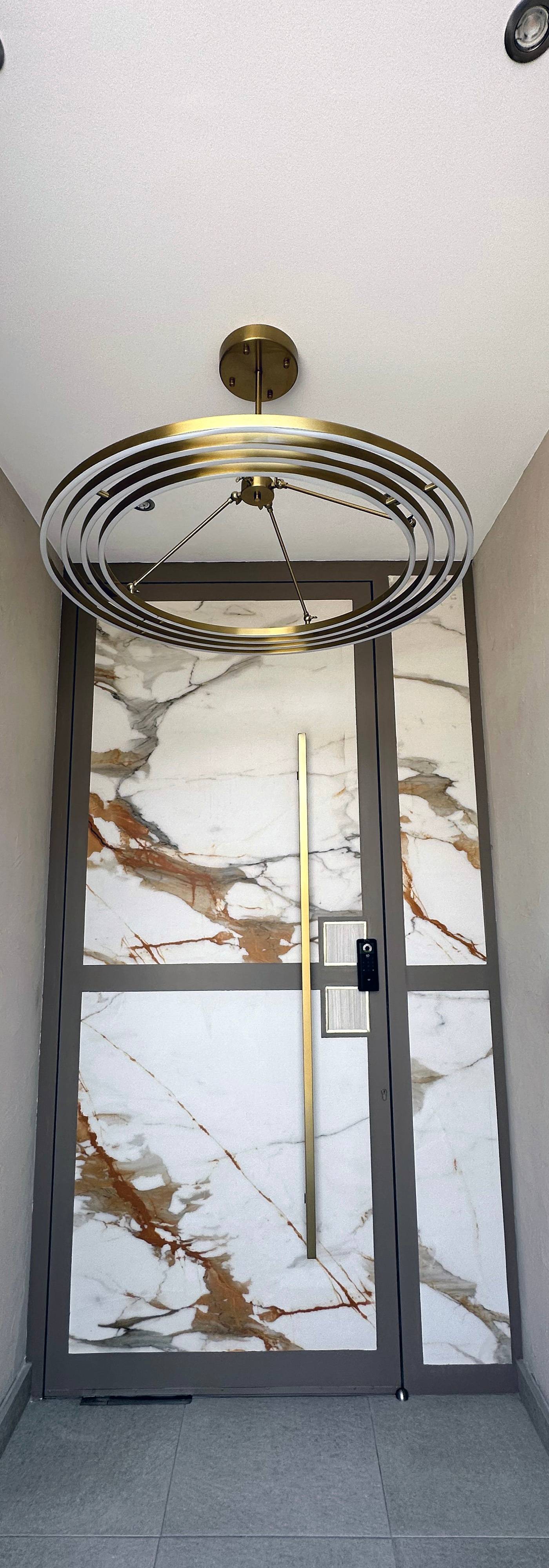
A villa entrance we finished. The door leaf and frame are the same discussion as a window: profile, weight and how the opening is made good.
UV, colour fade and the powder coat question
White uPVC chalks and yellows under strong sun. Foil-wrapped colours fade unevenly, and the darker the foil, the more heat it absorbs and the more the profile wants to move. Powder-coated aluminium on a qualified coating system holds colour far better, and if it does dull after years of exposure it can be recoated without changing the window. Anodised aluminium suits coastal elevations: no coating to fail, though the colour range is narrow.
Approvals, NOCs and how frames last in salt air
Changing a window in Dubai is a building change, not just a purchase. In a managed villa community you will normally need a developer or community NOC, and often Dubai Municipality involvement, before the facade changes. In a tower, the developer or owners association has a say on profile, colour and how the unit reads from outside. Shopfronts need landlord sign-off on the frontage and the signage. Ask about approvals before you pay a deposit. A supplier who shrugs at the question has told you something.
Salt air is unkind to the parts you cannot see. Hinges, friction stays and gaskets fail long before either frame does. Stainless hardware and EPDM gaskets are the difference between a window that still closes after years near the coast and one that whistles. Repairability splits the two materials: an aluminium frame can be re-gasketed, re-hung and recoated, while a failed uPVC weld or a bowed sash usually means a new window.
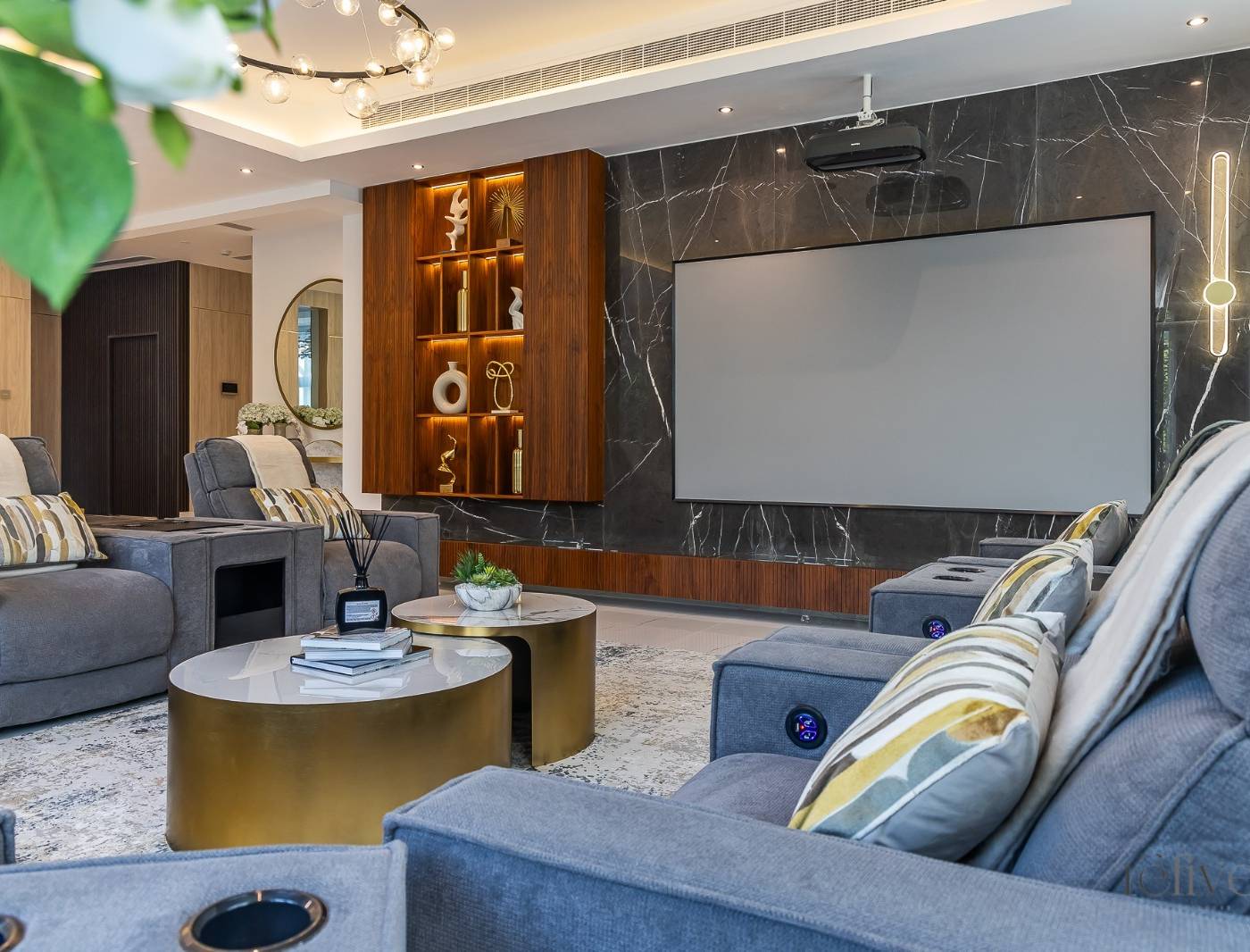
A media room in a villa fit-out. On projects like this the glazing spec and the interior finish are decided together.
What a fair quote should itemise
Frame profile by name and series, with wall thickness and the thermal break described. Glass specification including thickness, whether it is tempered or laminated, the spacer type and the gas fill. Hardware, named: hinges, handles, multipoint locks, restrictor stays. Removal and disposal of the old units. Making good the reveal, silicone and paint line. Approvals, plus any access equipment for an upper floor. A written snag list with a date on it. One number and a photo of a window is not a quote.
The Google profile for this team shows 5 from 3 reviews, and the theme in them is simple follow-through:
Excellent service and quality of work , definitely recommend them Ismail Arbee, 5/5
If you are still weighing it up, see completed aluminium and glass installations from villas and shopfronts, or read more Dubai fit-out and glazing guides.
Verdict: which material, which building
| Situation | Better choice | Why |
|---|---|---|
| Full-height villa sliding or folding opening | Aluminium | uPVC cannot span it or carry the glass weight |
| Standard apartment bedroom or bathroom window | uPVC, or aluminium with a thermal break | Short span, so the insulated frame wins |
| Tower replacement where the facade must match | Aluminium | Matches the existing profile and colour |
| Restaurant or retail frontage | Aluminium | Structural, glazed, takes shopfront hardware |
| West-facing elevation in direct sun | Aluminium with a good powder coat | Less movement, colour holds |
To get a price on your own opening, send photos of the frame from inside and outside, the width and height in millimetres, and the building, community or tower name, since approvals and access change the answer. Add whether it is a villa, an apartment or a shopfront, and whether the new unit has to match an existing elevation. WhatsApp +971 50 428 9742 with those details and you can request a window survey and quote from there.
Frequently asked questions
Can you replace uPVC windows with aluminium in a Dubai apartment?
Yes, and the frame swap is the easy part. The constraint is the building: the developer or owners association usually has to approve a change to the facade, and the new profile has to match what the elevation already uses. Get that approval before ordering, then specify aluminium with a thermal break so the replacement performs better than what came out.
Does aluminium cause more condensation than uPVC in Dubai?
Bare aluminium does, because the frame stays cold and humid air condenses on it. With a polyamide thermal break and a sealed unit built on a warm-edge spacer, condensation on the frame drops sharply. Most fogged frames we are called to look at are a spacer or gasket problem, not the metal itself.
Is aluminium or uPVC cheaper for a villa window replacement in Dubai?
On small standard windows uPVC is usually the lower-cost option. On full-height sliding or folding openings it is not a real comparison, because uPVC cannot span the opening or carry the glass. Price is driven by profile, glass specification, hardware and access, so ask for those itemised in writing.
Do I need approval to change windows in Dubai?
Usually yes. Villas in managed communities normally need a developer or community NOC, towers need the developer or owners association to agree the profile and colour, and shopfronts need landlord sign-off on the frontage. Confirm the process before paying a deposit.
How long do window frames last in coastal Dubai air?
The frame outlasts the hardware in most cases. Hinges, friction stays and gaskets take the salt and go first, on both materials. Stainless hardware and EPDM gaskets buy years, and aluminium can be re-gasketed and recoated where a failed uPVC weld usually means a new window.