Glass balustrade replacement Dubai: when a panel comes out
A panel comes out for four reasons, and only one of them is really about the glass. The rest are about what holds it, or what the glass is made of. The decision gets made at the fixing during a survey, not from a photograph of the balcony.
Repair or replacement: the four signals that decide it
A chip or shell at the edge of a toughened panel is terminal. Toughened glass cannot be ground or polished once it is tempered, and the edge carries the panel load. If the damage reaches the tension zone, the panel can go on a hot afternoon with nobody near it. Most calls about replacing glass balustrade panels in Dubai start here, and no repair compound helps.
Spontaneous breakage follows the same logic. A panel that shatters into dice with no impact has almost always gone on a nickel sulphide inclusion in the batch. Replace it, then inspect the panels either side, because they came from the same run.
Corroded or loosened spigot bases are the one fault where frameless glass balustrade repair in Dubai is genuinely cheaper than replacement. If the glass is sound and the movement is at the base plate, it is a balustrade spigot replacement Dubai job and not a glass job: pull the spigot, check the substrate and the fixing, re-set and re-torque.
Monolithic toughened glass on a raised balcony is the fourth signal. It breaks into a sheet of dice and it falls. Laminated glass holds its fragments in the interlayer. A replacement is the moment to change that spec, not copy it.
What the survey day actually involves
We do not quote a replacement off a photograph of the whole elevation. Fixing centres get measured first: spigot spacing, distance from the slab edge, height of the glass line. The new panel sits on the bases already in the slab, so its hole positions are set by them.
Then the base detail. Spigot row, standoffs or a base channel, and whether water sits at the channel after rain. A blocked drainage hole or a flat fall will corrode a new base exactly the way it corroded the old one.
Then the glass itself: thickness, laminated or monolithic, edgework, corner radii. Matching an existing run is a specification exercise.
Access is the real constraint in Dubai
The panel is rarely the hard part. Getting it to the balcony is. A high-rise replacement means building management approval, a method statement, and a lift protection booking so the service car is padded before anything goes up. Working hours are usually set by the tower. In some buildings the panel will not turn inside the lift and it goes up the stairs, which changes the panel sizes.
Then the route. Finished floors boarded, corners protected, the balcony door measured before fabrication. Fit-out crews already work this way, which is why the same teams protect a handed-over restaurant or villa on the way through.
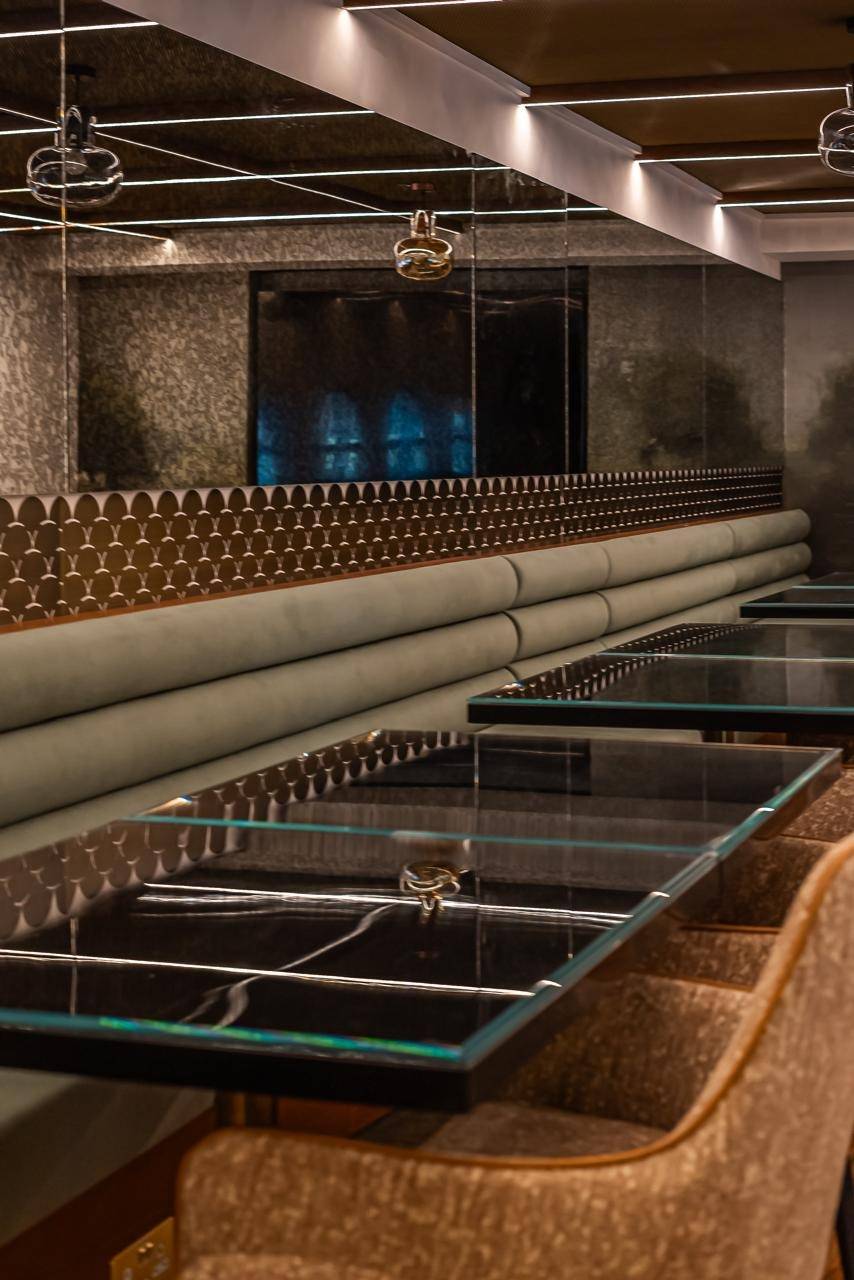
A finished restaurant interior: green banquette, glass-top tables, scalloped metal wall and mirrored panels picking up the ceiling lights.
Glass spec and how long a replacement takes
Toughened glass is cut, drilled, edge-polished and then tempered. Nothing can be drilled or trimmed afterwards, which is why the survey measures hole positions instead of estimating them. Standard thickness and standard fixing centres may allow a stock panel. Anything else is fabricated to order, and fabrication, not installation, sets the timeline.
On an occupied building we phase the work panel by panel so the balcony is never fully open. Straight swaps come out and go in on the same visit. You can see completed glass balustrade work on the portfolio page before you commit.
What a fair replacement quote should itemise
Per panel, the glass type and thickness, so you can check it against what is in place now. Then the hardware line: spigots, standoffs or channel, replaced or reused. Then handrail and fixings if the run has them.
Access and lifting should be its own line, not folded into the glass price. So should removal and disposal of the old glass, making good at the base and slab edge, and handover, meaning the clean-down and a final check that every panel is seated. A single number for the whole run, with no glass spec, tells you nothing. There are more glass and aluminium guides on the articles page if you are pricing a whole run rather than one panel.
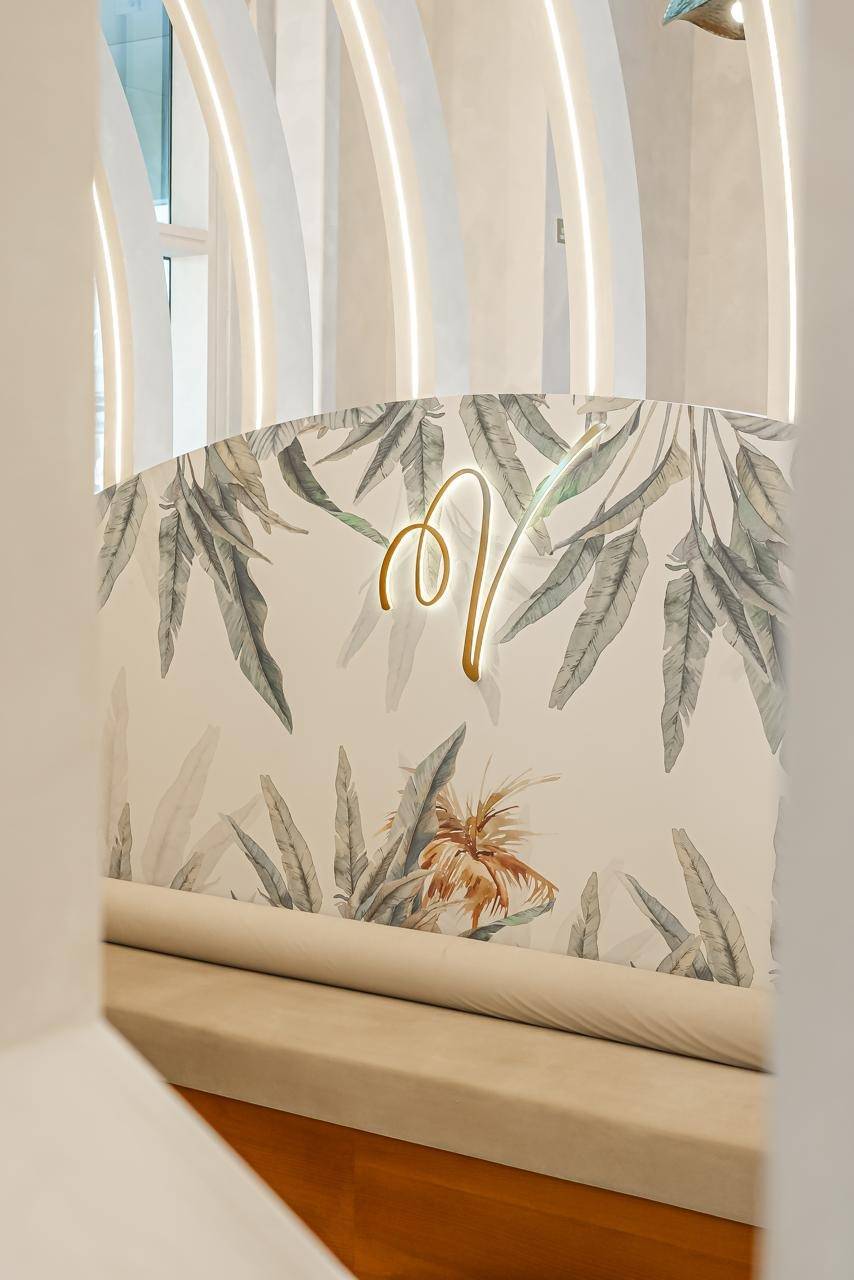
Curved wall, leaf wallpaper, gold logo and strip lighting, finished and handed over clean.
Send photos of the full run, a close-up of the damaged edge or the spigot base, the panel count with a rough width for each, the building name and floor, and whether the balcony sits over occupied space. WhatsApp is the fastest way to a surveyed price, and you can book a balustrade survey in Dubai once we have confirmed the spec.
Frequently asked questions
Can one glass balustrade panel be replaced without removing the rest?
Yes, when the new panel matches the existing fixing centres, thickness and hole positions. The spigots stay in the slab, the old panel lifts out and the new one goes in. If the bases have moved or it is a channel system, more of the run has to come apart.
Is repairing a frameless balustrade cheaper than replacing the panel?
It is cheaper only when the glass is intact and the fault is at the fixing, such as a loosened or corroded spigot. Chipped or shattered toughened glass cannot be repaired, and no polish or resin makes an edge safe again.
Can you match the glass when the original supplier is gone?
In most cases yes. We measure thickness, glass type, edgework and hole positions from the panels still in place, then specify the new one to those numbers. Tinted or coated glass is the harder match, and we will say so before you commit.
Does a balcony glass replacement need building approval?
Most towers require building management approval before glass goes up, plus a method statement and a lift protection booking. Working hours are set by the building. We prepare the paperwork for them and work inside their window.
Should the new panel be laminated or toughened?
On a raised balcony or any balustrade above occupied space, laminated glass is the safer specification because the interlayer holds the fragments. Toughened is common at ground level. We match what the structure and the building call for.